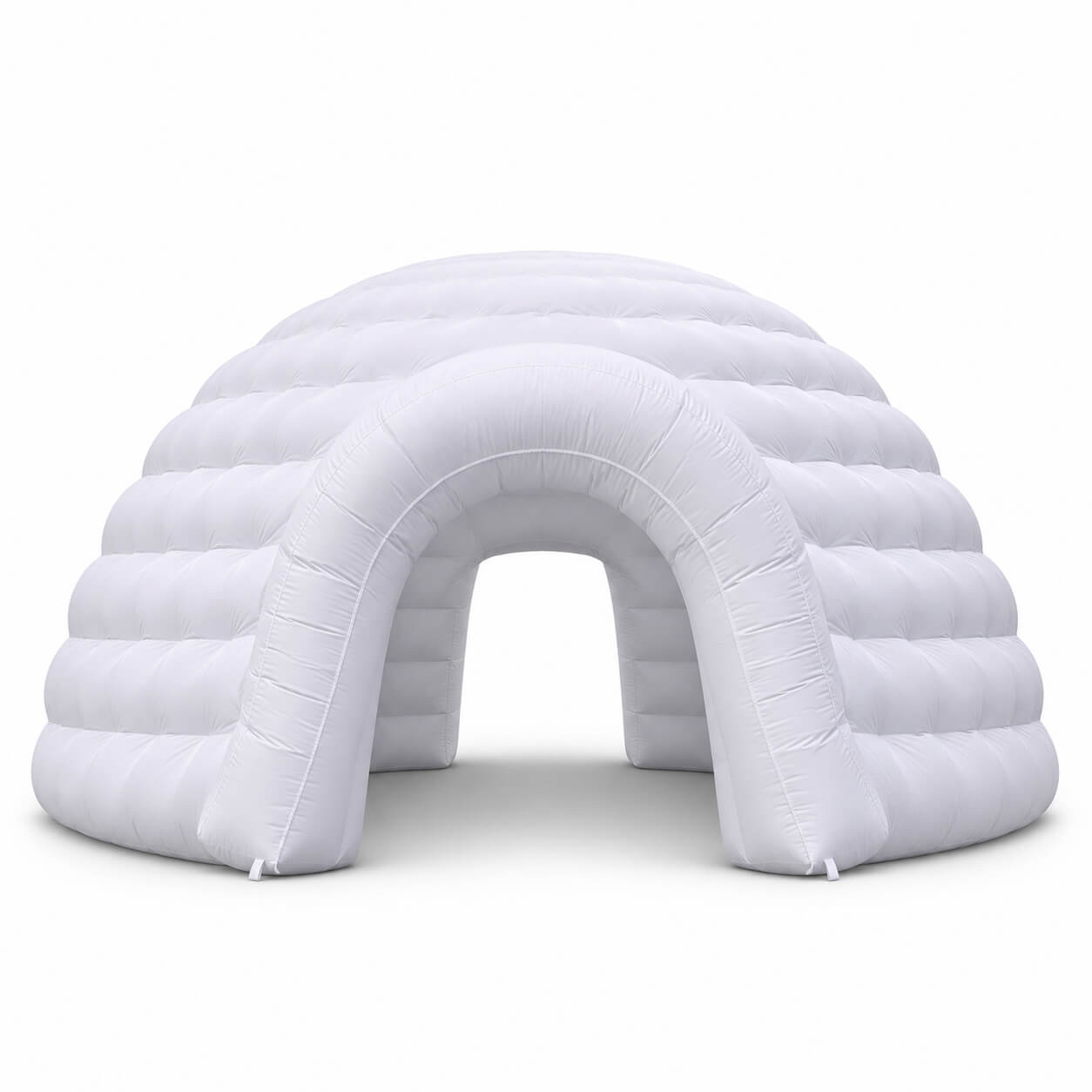
1. Measure Ground Footprint & Overhead Clearance
Always measure the exact clear area around the installation spot, leaving extra room for tie-down lines, ballast weights, and safe pedestrian circulation.
For inflatable arches, distinguish exterior width and height from the clear inner passage opening required for visitors, carts, or sightlines. Indoors, verify ceiling trusses, lighting rigs, sprinkler heads, and doorway access.
- Record length, width, and lowest overhead obstruction at the exact placement point.
- Confirm external size vs. inner opening separately on all archway projects.
- Allow clear space for blower placement and intake airflow on continuous-air displays.
2. Confirm Surface Type & Anchoring Plan
Anchoring hardware depends directly on the ground surface. Grass or soft soil allows ground stakes where venue rules permit, while paved plazas, concrete forecourts, and indoor exhibition floors require ballast weights (such as sandbags or water weights) and non-damaging tether layouts.
Outdoor installations should always be monitored in changing weather and deflated promptly if strong gusts or adverse conditions develop—never assume an inflatable is rated for high winds.
- State your surface type (grass, asphalt, concrete, indoor carpet, or roof deck) during quotation.
- Confirm with venue management whether stakes are allowed or if ballast-only anchoring is mandatory.
- Include tie-down supervision in your on-site staff checklist for outdoor campaigns.
3. Check Electrical Supply & Cable Safety
Continuous-air models and air dancers require steady electricity throughout display hours. Verify local voltage/plug standards, distance to the nearest power drop, and cable-cover requirements across walkways.
For outdoor setups, protect electrical connections and blowers from rain and standing water according to local electrical safety standards.
4. Venue Permissions & Rooftop Compliance
Trade-show halls, shopping centers, and municipal outdoor squares often require advance display drawings or venue sign-off. Commercial rooftop displays carry additional obligations: independent local structural roof-load checks, wind-load review, and municipal signage permits must be arranged locally before installation.